
TouchDRO Releases and the Beta Track
TouchDRO is released on two tracks. The production track is what you get by default from the Google Play Store and the Amazon Appstore. The open beta track gets new versions earlier and more often, before they are ultimately pushed to production. This page explains which versions are current, how to switch to the beta track, and what to consider before you do.
Current Versions
The current production version of TouchDRO is 3.25.03.
The current beta version is 3.32.00. The "TouchDRO 3.32 Release Notes" page describes what is new in it, and links to the manual pages that cover the new functionality. Those manual pages are marked with a note that says which version they require.
The full history is on the "Release Notes" page, along with the release notes for the adapter firmware.
Which Track Should You Use
A beta version has new features that are finished, but it has not been used on as many tablets and setups as a production version. In other words, it's more likely to have a bug that we have not run into yet.
If you use the DRO for paid work and don't need anything that is new in the beta, the production version is the safer choice. On the other hand, if you want a feature that is marked as requiring the beta version, or if you like to try new functionality early and don't mind reporting a problem when you find one, the beta track would work well for you.
Note that this is a one-way decision for the version you install. Once a tablet has been updated to a beta version, there is no way to go back to the previous version. You can leave the beta program later, but the tablet keeps the version it has until the production track catches up.
Before You Join
It's very important to back up your setup before you update to a beta version. A new version often upgrades the application database the first time it starts, and that upgrade can't be reversed. If something goes wrong with your setup after the update, the exported files are the way to rebuild it.
The following can be exported to files from the production version:
- Machine profile settings - see "Backing Up and Restoring Settings"; if your version doesn't have the "Backup" section yet, write down the scale resolutions and directions from the axis settings
- Sub-datums, one workspace at a time - see "Importing and Exporting Sub-Datum Coordinates"
- The tool library - see "Managing Tool Offsets on a Lathe" or "Mill Tool Library"
Copy the files off the tablet, or to a cloud drive, so they survive if the application is uninstalled.
Access to Beta Testing
Access to the beta version is open to everybody, but you need to opt into the testing track. This is done from the TouchDRO page in the Google Play Store, using the Google account the tablet is signed into:
- On the tablet, open the Google Play Store and go to the TouchDRO page.
- Scroll down to the "Join the beta" section and tap "Join", as shown in the screenshot below.
- Wait for Google to add your account to the program. This usually takes under 30 minutes, and the section will say that you are a beta tester once it's done.
- Go back to the TouchDRO page and tap "Update". If the button is not there yet, give it a bit more time.
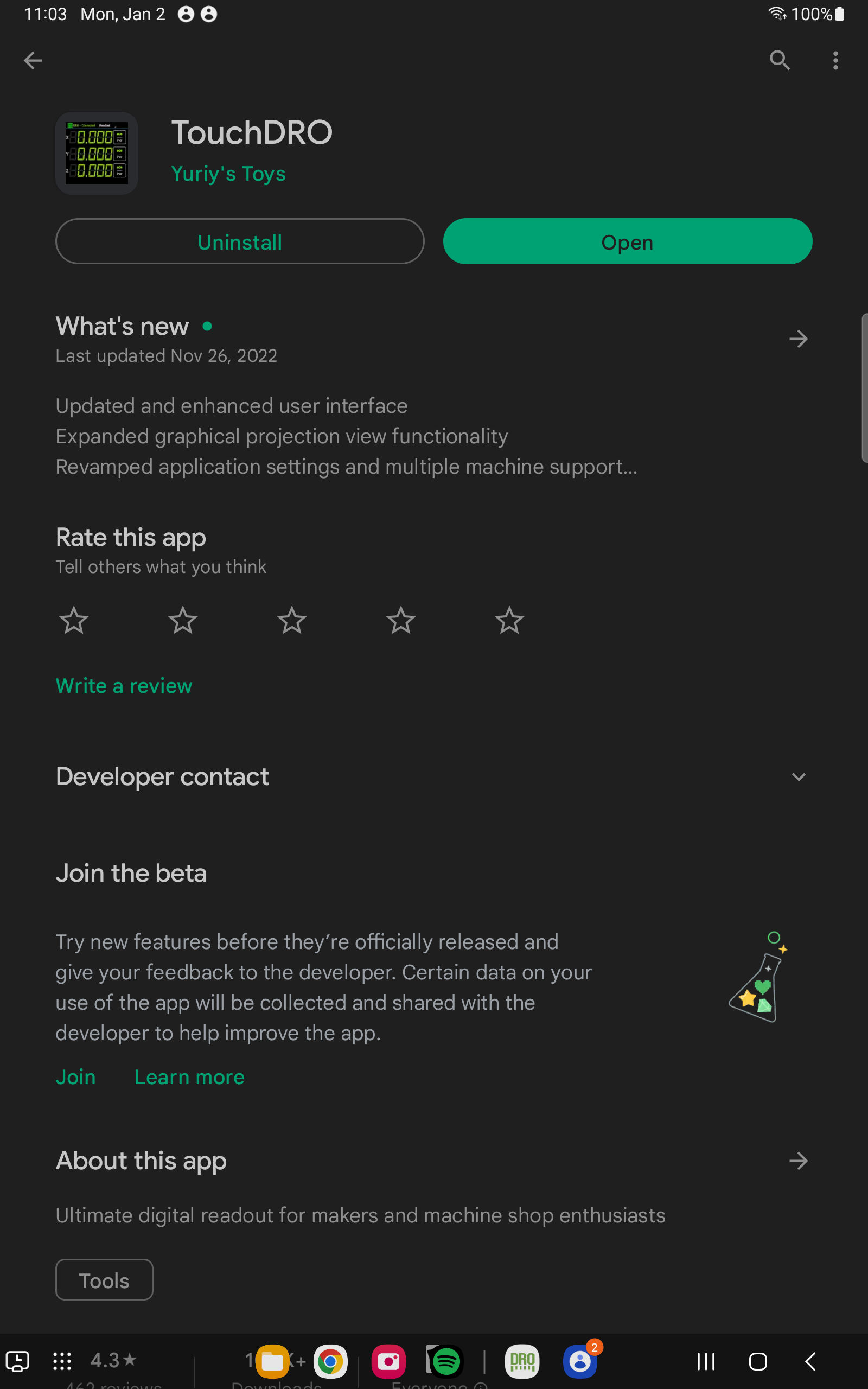
From that point on, the tablet will get beta versions through the regular Play Store updates. Each tablet follows the Google account it's signed into, so a second tablet on the same account will be offered the beta as well.
Leaving the Beta
To stop getting beta versions, go back to the same section of the TouchDRO Play Store page and tap "Leave". From that point on, the tablet will only be offered production releases.
Leaving the program doesn't change the version that is already installed, and TouchDRO can't be downgraded. The tablet will keep the beta version it has, and the next update it gets will be the first production release that is newer than that version.
Reporting a Problem
If you run into a problem with a beta version, please let us know using the contact form. A useful report includes the TouchDRO version, the tablet model and Android version, the adapter model and firmware version (both are shown in the "Adapter Details" dialog), and the steps that lead to the problem. A screenshot helps more than a description.