
Replacing Your Acu-Rite DRO Console with TouchDRO
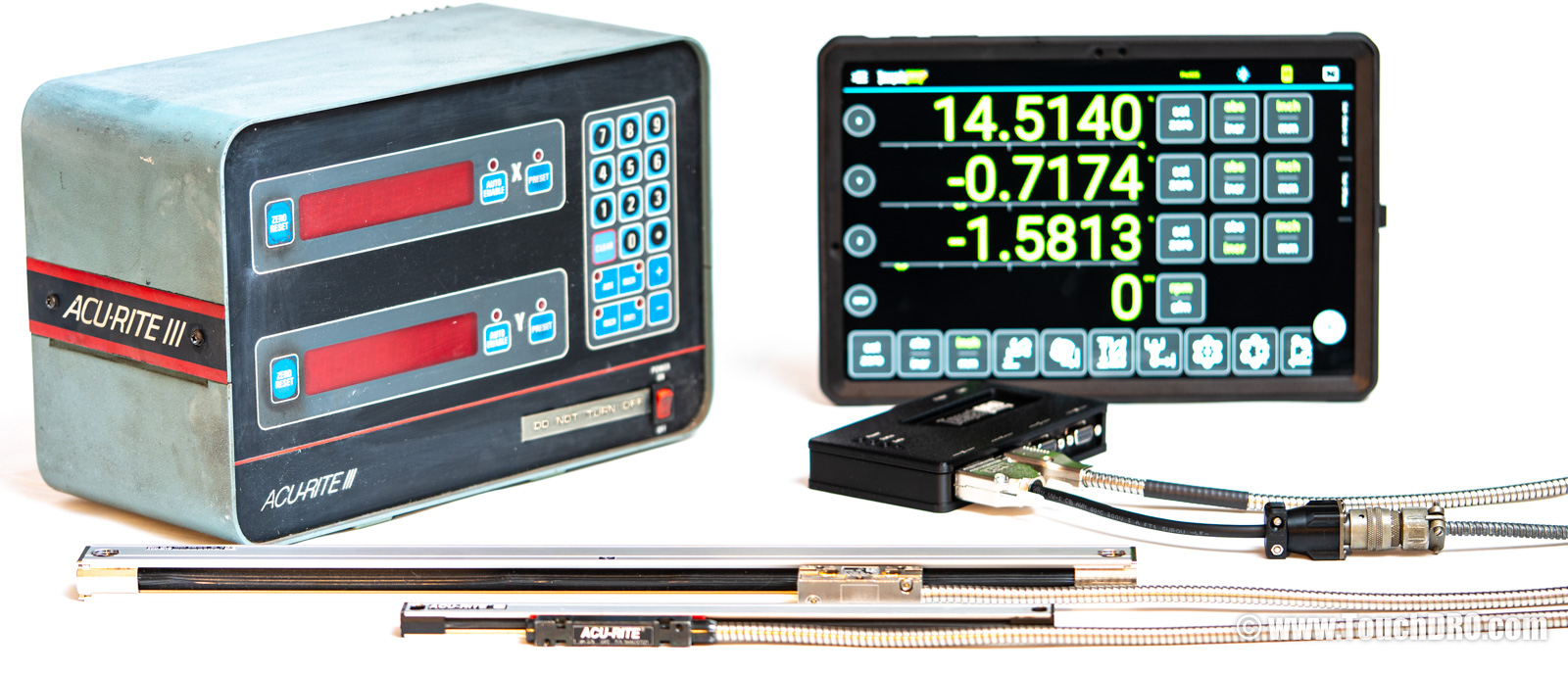
If your Acu-Rite DRO has failed, or is starting to show its age, you might be trying to decide if it's better to find a used console from the same era, or just replace the whole setup with a modern package. The good news is that you have a third option: keep your scales, which are probably still fine, and replace the aging console with TouchDRO.
Acu-Rite scales work very well with TouchDRO. This includes SENC, ENC, and Mini-Scale glass paired with anything from the older II, III, Master MP, MillVision, and QuickCount generations through the current VUE, 200S, 300S, and DRO100 / DRO203 / DRO300 families. The TouchDRO adapter for milling machines and the adapter for metal lathes both cover these scales.
One important exception worth noting: the 1990-era MillMate and TurnMate consoles used an analog 11μA current-loop signal that isn't compatible with modern TTL-based DROs, TouchDRO included. You can reuse everything else in the Acu-Rite lineup.
Why Replace Your Acu-Rite Console with TouchDRO?
For most Acu-Rite owners, the valuable part of the system has always been the scales. When the console fails, ages out, or just starts limiting you, you really have three paths: another Acu-Rite, a budget Chinese DRO, or TouchDRO.
TouchDRO reads Acu-Rite SENC, ENC, and Mini-Scale glass natively, including reference marks. You don't need to replace your scales or touch the existing installation; you swap out the console and keep everything else.
Staying with Acu-Rite is the expensive path. A used II, III, or Master MP is just another aging box with no parts pipeline behind it, and a new DRO100 or VUE will cost you $1,500+ for a multi-axis setup. TouchDRO gives you modern, actively supported electronics for a lot less, without either tradeoff.
A $200–$400 eBay unit is cheaper than TouchDRO plus a tablet, but that's not the whole comparison. Most budget DROs ship with their own scales, so going that route means scrapping your Acu-Rite glass to save on the console. Reusing your existing scales is hit-or-miss too; many budget units accept only single-ended input and can't read the differential TTL signal that SENC scales output. Moreover, once a generic console leaves the factory, that's it: no firmware updates, no spare parts, and nobody to email when an axis starts miscounting.
Acu-Rite Scales and Connectors at a Glance
Acu-Rite has produced more than 25 console models over 50+ years, but fortunately almost all of them output a 5V quadrature signal (single-ended or differential), regardless of connector type. The rest is mostly a matter of which physical connector is on your scales.
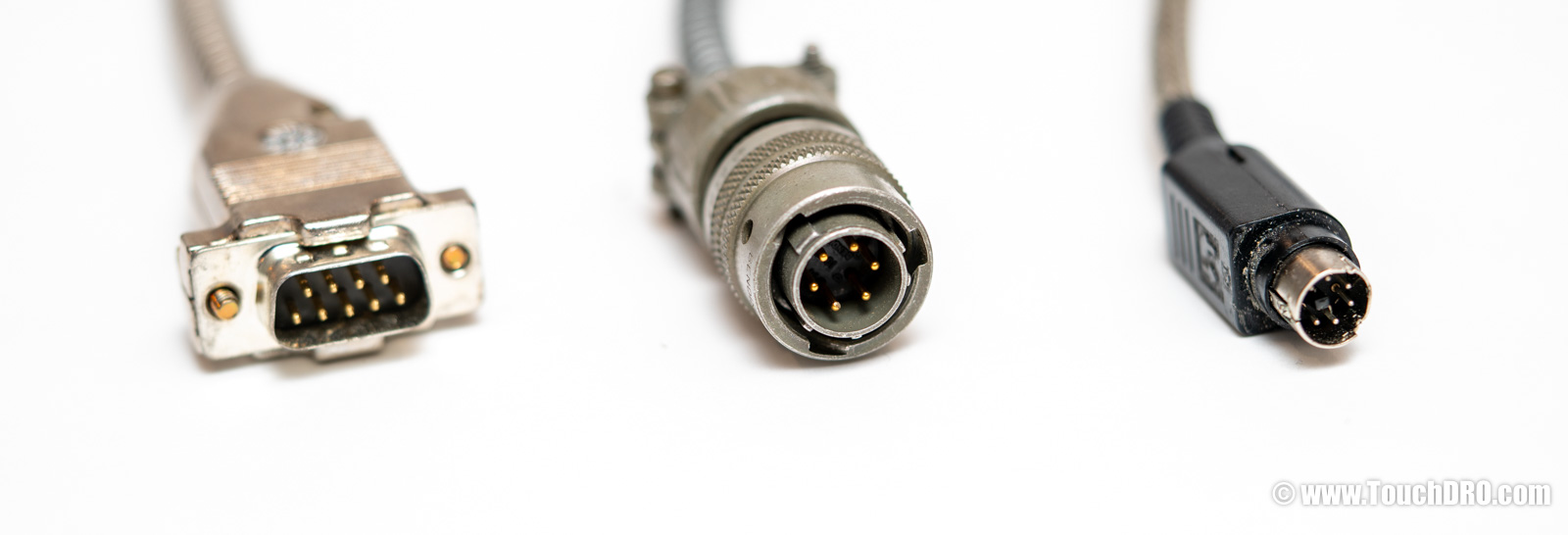
| Connector | DRO Model | Era | TouchDRO Compatible? |
|---|---|---|---|
| 9-pin D-Sub, TTL | DRO100 / DRO203 / DRO300, VUE, 200S, 300S, DRO 100S GP/M/T, original DRO 100 / 200 / VRO 300 | 1997–present | Yes - direct plug-in * |
| 6-pin MS (twist-lock), TTL | Master, EDMVISION, QuickCount, Acu-Rite II / III / L / 5, MillVision, TurnVision, PRO | 1968–1992 | Yes - with adapter cable or connector swap |
| 6-pin Mini-DIN, TTL | MICRO-LINE Mill, Turn | 2001 | Yes - with connector swap or adapter |
Acu-Rite Scale Connectors
9-Pin D-Sub Connector (Modern)
Acu-Rite scales made since about 1997 use a 9-pin D-Sub connector, similar to the one shown below. This includes the ENC and SENC scale series that shipped with the VUE, 200S, 300S, and the current DRO100 / DRO203 / DRO300 consoles. Most of these scales output a differential TTL signal, but scales that shipped with the DRO 100S (as well as some lower-priced Anilam consoles) output a single-ended signal instead.
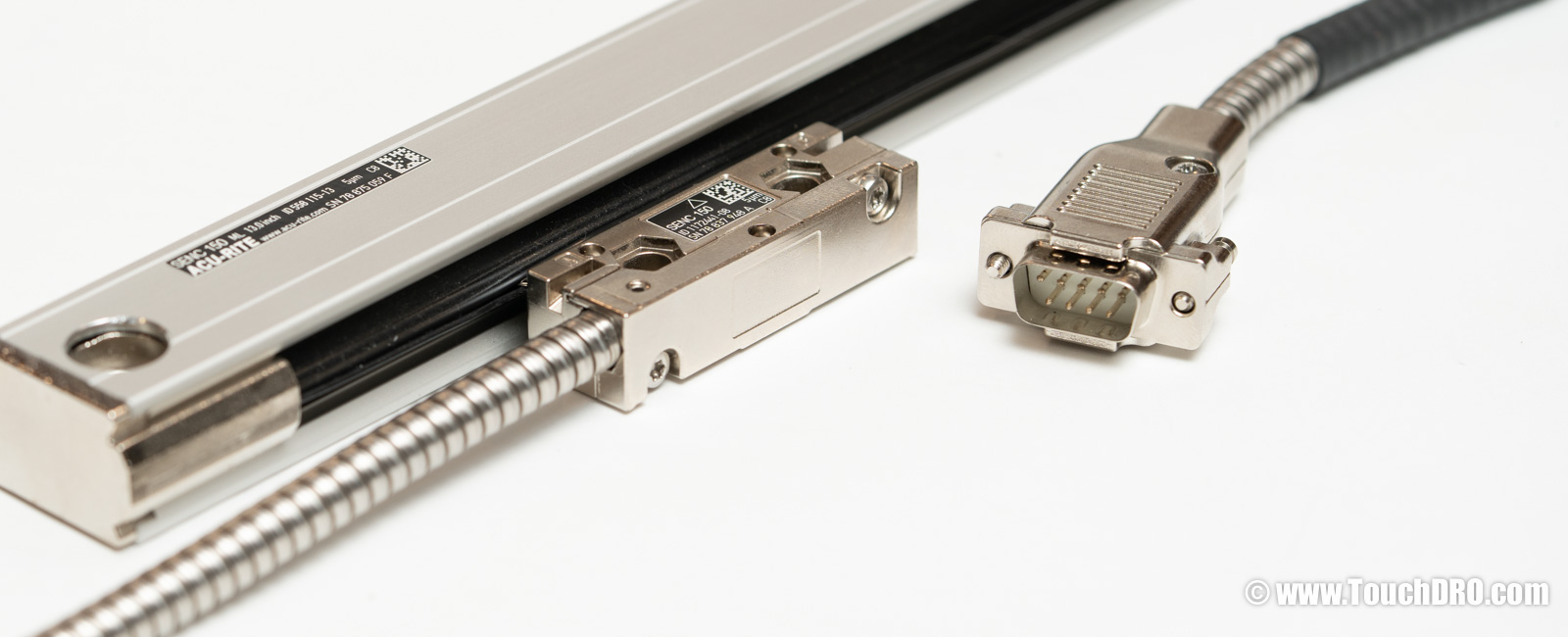
Acu-Rite SENC scales are one of the most popular scale options among TouchDRO users, so we offer our TDA-410 milling machine and TDA-420 lathe adapter kits pre-configured for the Acu-Rite pinout. The adapters read both single-ended and differential TTL, and can use the scale's reference pulse to re-establish absolute position after a power cycle.
For reference, the Acu-Rite DB-9 scale pinout is as follows:
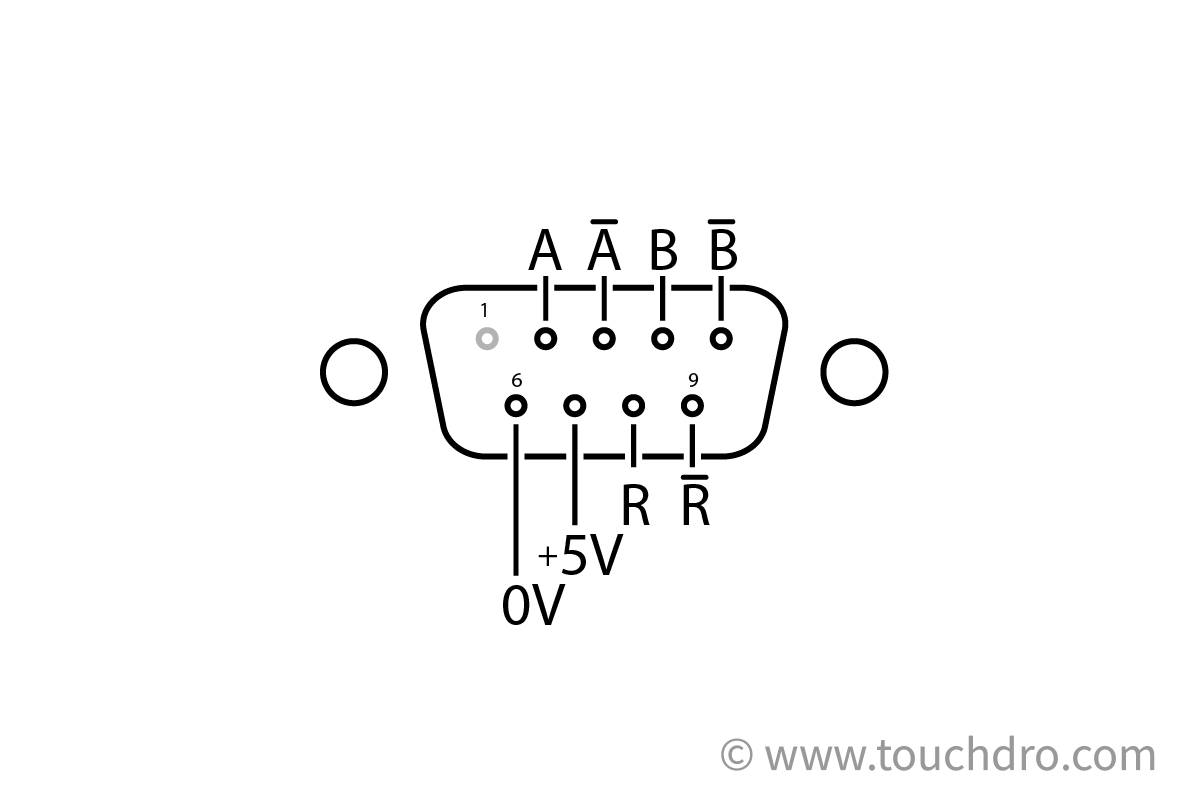
| DB-9 Pin | Signal |
|---|---|
| 2 | Channel A |
| 3 | Channel A (inverted) |
| 4 | Channel B |
| 5 | Channel B (inverted) |
| 6 | 0V / Signal Ground |
| 7 | +5V |
| 8 | Reference (index) |
| 9 | Reference (inverted) |
Pin 1 is unused. Differential scales populate all eight signal pins; single-ended scales omit the inverted channels on pins 3, 5, and 9.
6-Pin MS Twist-Lock Connector
Acu-Rite consoles built through the 90s, from the original Acu-Rite 5 in 1968 through the Master G/MP/TP and EDMVISION era in 1992, used a 6-pin MS-style (military-spec) twist-lock round connector. These scales are often referred to as "Acu-Rite Mini-Scales."
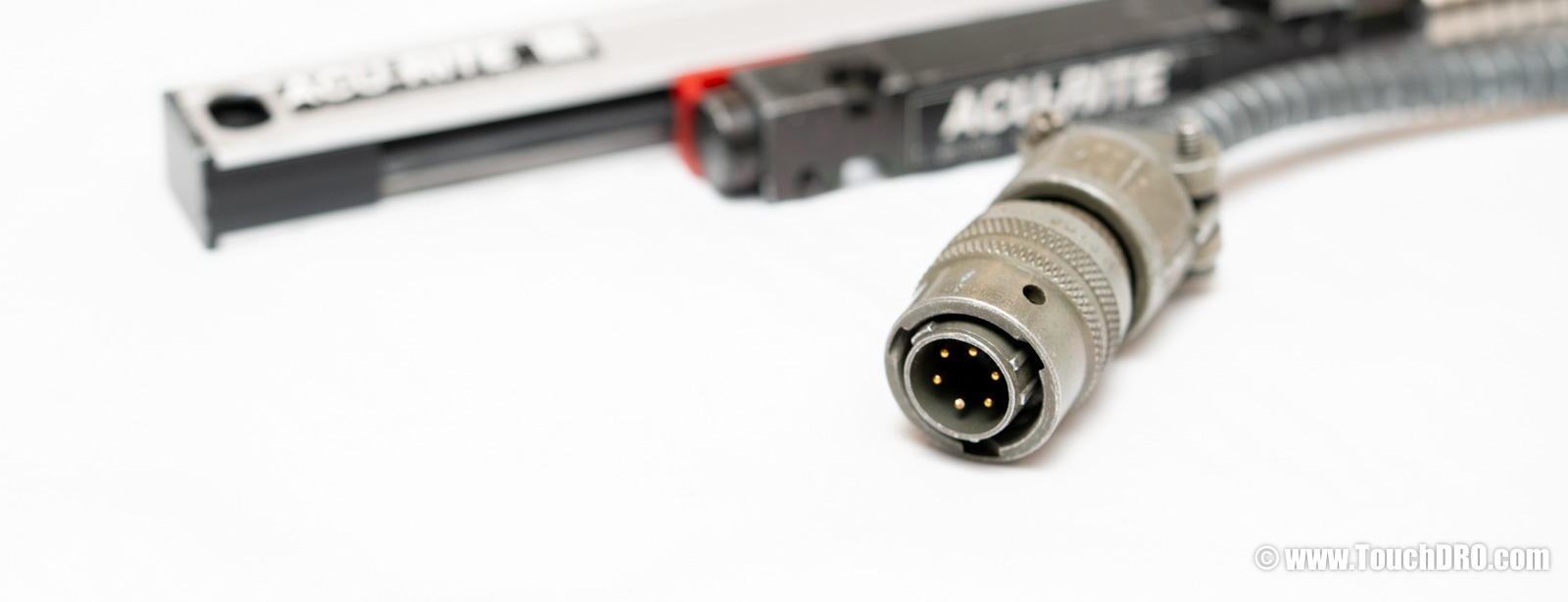
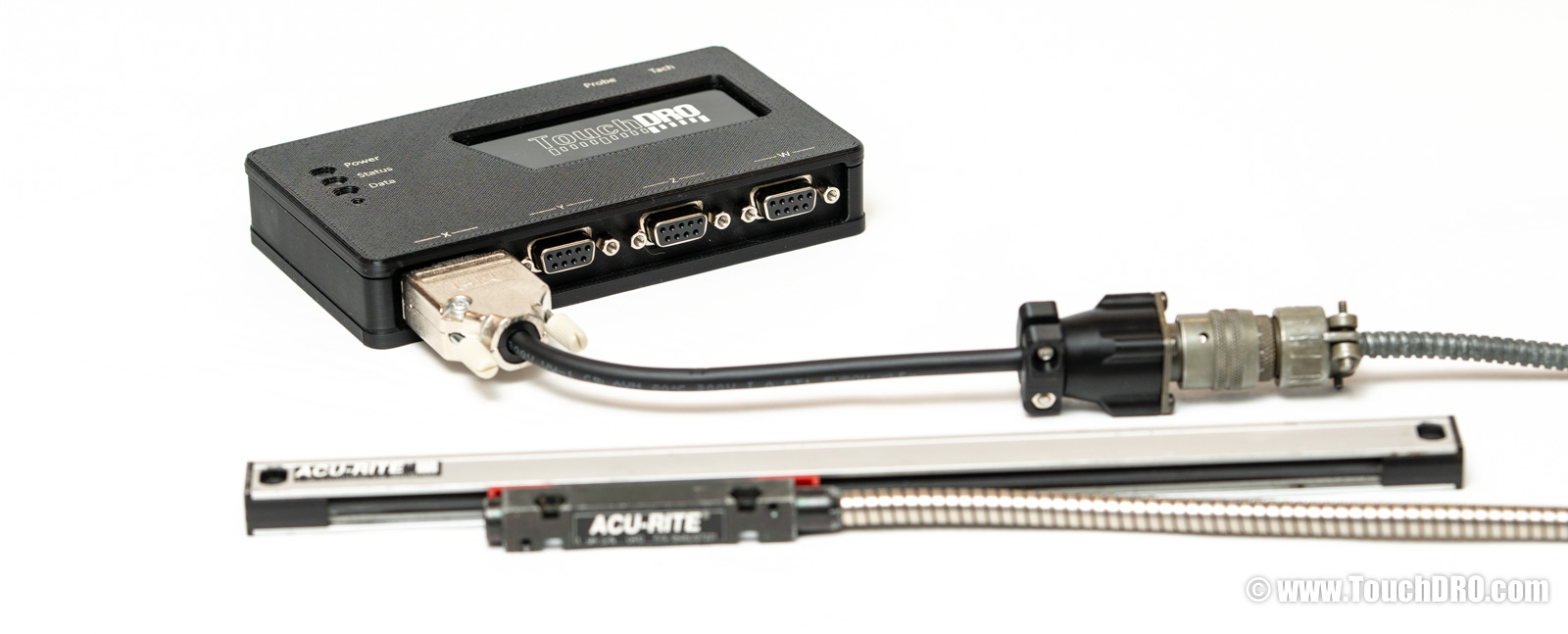
These scales output a standard TTL-compatible quadrature with a 5V signal level. They are electronically compatible with TouchDRO, but require either a simple adapter cable or a connector replacement.
In order to use these scales with TouchDRO, you can purchase a pre-made TDC-MS6 adapter cable from us, replace the stock connector with a D-Sub 9 male jack, or build an adapter cable yourself using an Amphenol PT06E-10-6S-SR plug.
The pinout of the scale connector is as follows:
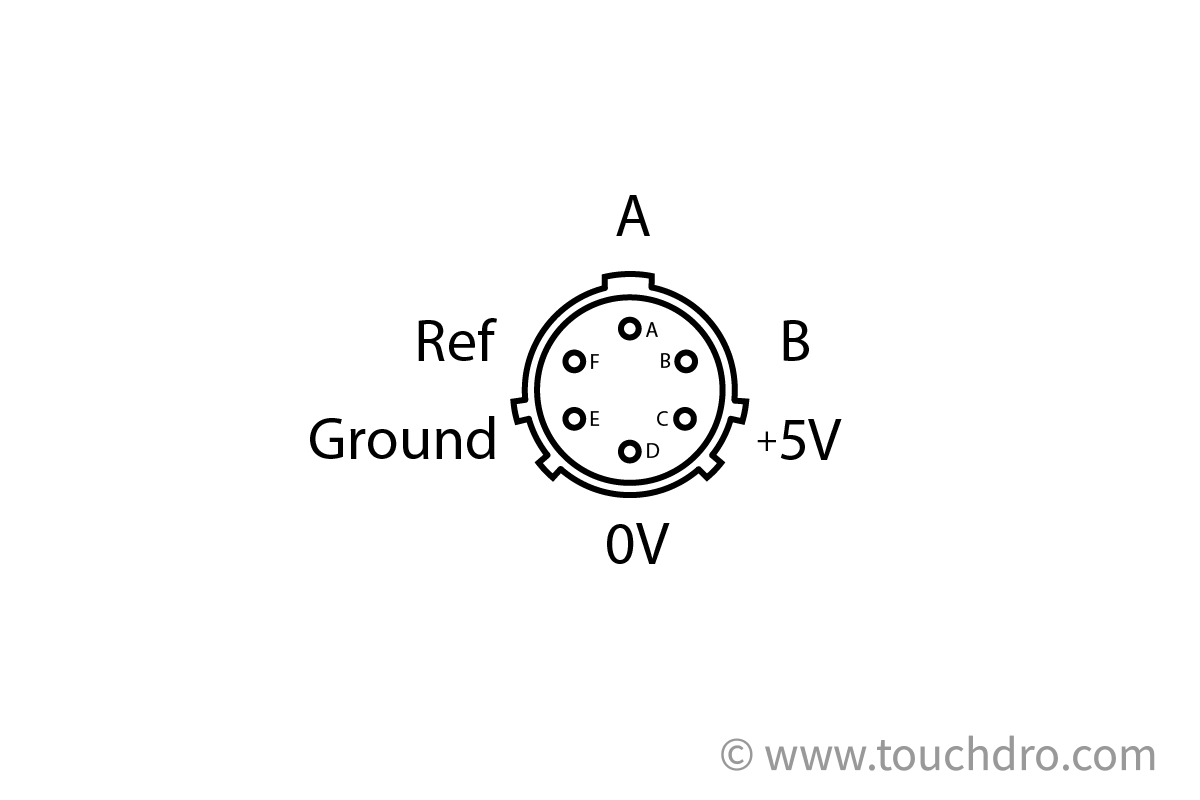
| MS Pin | Signal |
|---|---|
| A | Channel A |
| B | Channel B |
| C | +5V |
| D | 0V / Signal Ground |
| E | Shield / Ground |
| F | Reference (index) |
Mini-DIN 6-Pin Connector (MICRO-LINE)
The MICRO-LINE Mill and Turn, introduced in 2001, are the odd ones out in the Acu-Rite lineup. These compact readouts shipped with scales that use a 6-pin Mini-DIN connector instead of the D-Sub or MS connectors found on every other Acu-Rite console.
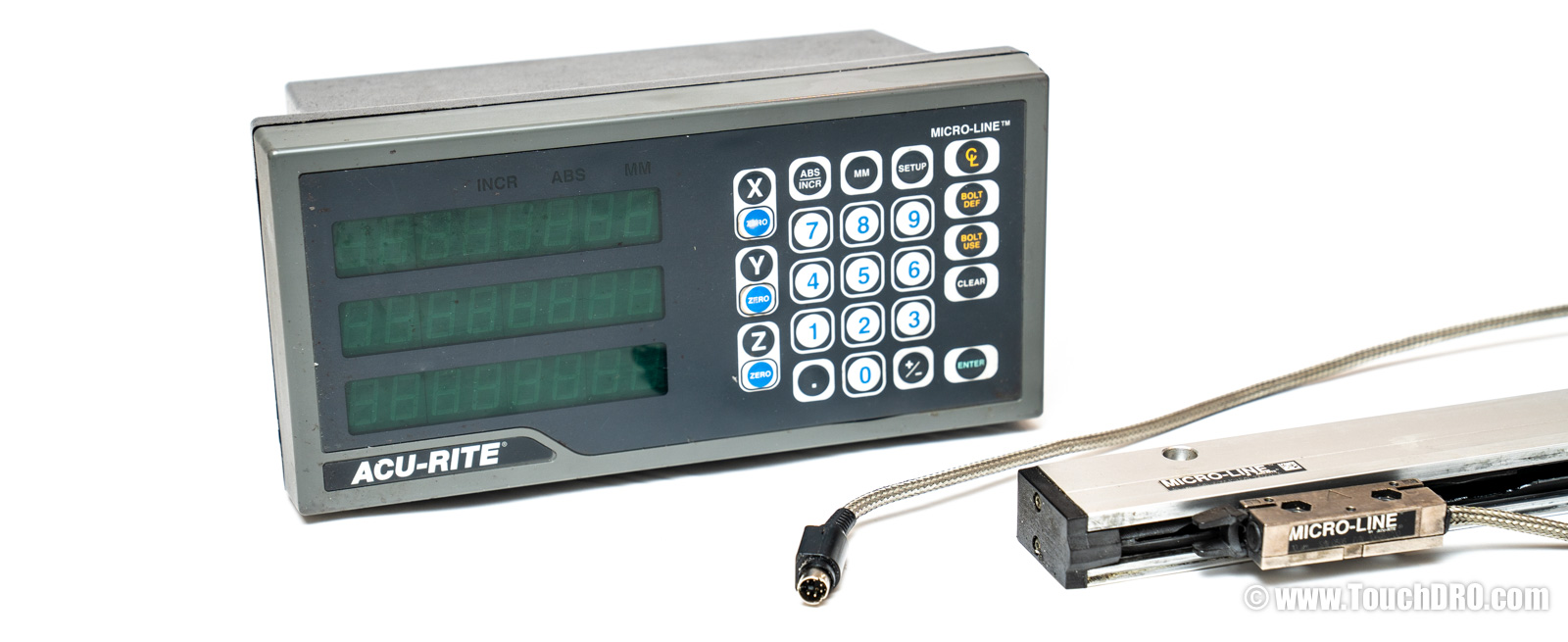
Electrically, these scales output a standard 5V TTL quadrature signal and are compatible with TouchDRO. Only the physical connector stands in the way.
To use MICRO-LINE scales with TouchDRO, you can either replace the Mini-DIN plug with a DB-9 male jack directly, or build a short Mini-DIN-to-DB-9 adapter cable. 6-pin Mini-DIN plugs can be harder to source than standard D-Sub connectors, so most people find it simpler to cut off the original connector and solder a DB-9 on in its place. Once the connector is swapped, you can plug the scales into the milling machine or lathe adapter kit like any other TTL scale.
The pinout of the scale connector is as follows:
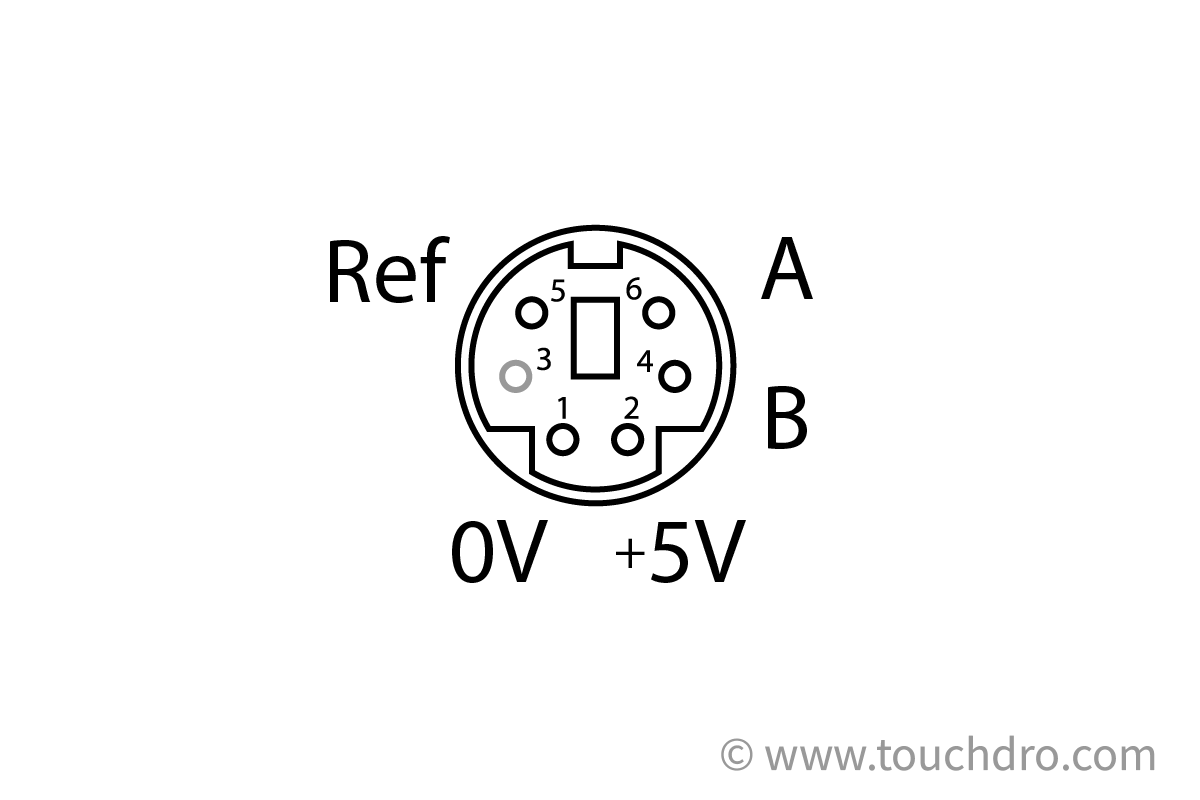
| Mini-DIN Pin | Signal |
|---|---|
| 1 | 0V / Signal Ground |
| 2 | +5V |
| 4 | Channel B |
| 5 | Reference (index) |
| 6 | Channel A |
Most MICRO-LINE scales don't actually populate the reference track. The console supports the reference input and pin 5 is reserved for it, but only a few international scale models carry the signal; for most MICRO-LINE scales, pin 5 is unpopulated and can be skipped in the adapter wiring.
Frequently Asked Questions
[Expand]Can I replace an Acu-Rite DRO console without replacing the scales?
In most cases, yes. Acu-Rite SENC glass scales (the 9-pin D-Sub units made from 1997 onward) output standard 5V TTL quadrature and connect directly to a TouchDRO TDA-410 or TDA-420 adapter board ordered with an Acu-Rite pinout. Older 6-pin MS twist-lock scales also output TTL and can be used with an adapter cable or a connector swap. The exception is the 1990 MillMate and TurnMate series, which use an analog 11μA current-loop signal that isn't compatible with modern TTL-based DROs.
What is the replacement for the Acu-Rite VUE or 200S?
Within the Acu-Rite lineup, the current DRO100, DRO203, and DRO300 consoles replaced the VUE, 200S, and 300S. If the console died but the scales are fine, you don't need another Acu-Rite console at all: SENC and ENC scales output standard 5V TTL quadrature, so you can keep them and replace only the display with TouchDRO. Order the TDA-410 (mill) or TDA-420 (lathe) adapter with the Acu-Rite pinout option and the scales plug in directly.
Can I use my existing Acu-Rite SENC scales with TouchDRO?
Yes. SENC scales use a 9-pin D-Sub connector and output 5V TTL quadrature, which is exactly what the TouchDRO Acu-Rite pinout expects. Plug the scales directly into a TDA-410 or TDA-420 adapter board ordered with the Acu-Rite pinout option. No adapter cable, connector swap, or rewiring is needed.
Do Acu-Rite Mini-Scales work with TouchDRO?
Yes. Acu-Rite Mini-Scales from the 6-pin MS twist-lock era output 5V TTL quadrature, which TouchDRO can read. Because the TouchDRO adapter uses DB-9 inputs, you'll need either an adapter cable (6-pin MS to DB-9) or a direct connector swap on the scale cable. The Mini-Scale pinout is: Pin A = Channel A, Pin B = Channel B, Pin C = +5V, Pin D = 0V (signal ground), Pin E = shield, Pin F = Reference (index).
What connector do Acu-Rite scales use?
Acu-Rite used three connector types for TTL scales: a 6-pin MS twist-lock (Amphenol PT06E-10-6S-SR) from 1968 through the early 1990s, a 6-pin Mini-DIN on MICRO-LINE scales introduced in 2001, and a 9-pin D-Sub on SENC and ENC scales from 1997 to the present. All three are TTL and work with TouchDRO. A separate 9-pin D-Sub connector was also used on the 1990 MillMate and TurnMate, but that one carries an analog current-loop signal and is not interchangeable with the SENC D-Sub even though the shell is the same.
Can I replace my MillMate or TurnMate console and keep the scales?
Unfortunately, no. The 1990 MillMate and TurnMate scales output an 11μA analog current-loop signal rather than TTL, and no common modern DRO reads that signal directly. The practical path is to replace the scales with modern TTL units (Acu-Rite SENC or equivalent) and pair them with a TouchDRO. The mounting hardware and cable routing from the original installation can usually be reused.
Is an old Acu-Rite DRO worth repairing?
It depends on the model and the fault. Acu-Rite is still in business, so the recent consoles can be serviced, but the II, III, and Master-era boxes are 30 to 50 years old, and the usual failures (dead display segments, worn membrane keypads, dried-up electrolytic capacitors) tend to keep coming back at that age. For the cost of a repair or another used console of the same vintage, you can usually get a complete TouchDRO system and keep your existing scales.
Will I lose accuracy switching from an Acu-Rite console to a tablet?
No. Positional accuracy is determined by the scales, not the display. TouchDRO reads the same quadrature signal the Acu-Rite console did and counts it at full resolution, so a 5μm or 10μm scale still reports 5μm or 10μm on the tablet. The display only shows what the scales report.
Ordering the Right Adapter
If your Acu-Rite scales use the 9-pin D-Sub connector (and aren't from a MillMate/TurnMate), pick up a TouchDRO adapter kit for your milling machine or lathe and be sure to select the Acu-Rite pinout option. If your scales use the 6-pin MS twist-lock connector, you can also order a pre-made TDC-MS6 adapter cable, or build your own using the pinout above.
Not Sure What You Have?
If you're unsure about your connector type, whether your scales will work, or you have a MillMate/TurnMate and want to talk through the options, feel free to contact us directly; we're happy to help you figure it out before you commit to the switch.